

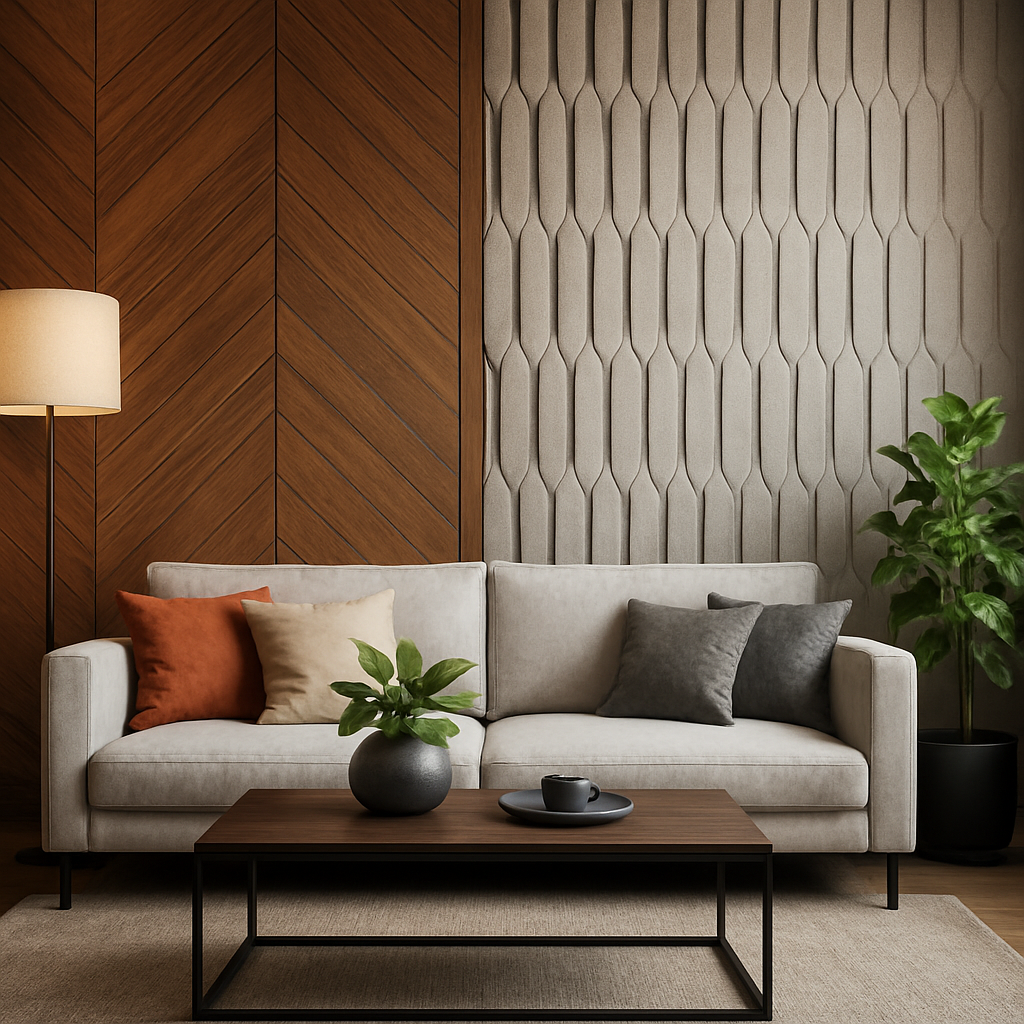

Wall Panels Decor: Stylish, Durable Options for Mumbai Apartments
Wall panels decor is a practical way to give cramped Mumbai apartments a stylish, durable finish that stands up to monsoon humidity and daily wear. This guide walks you through which materials perform in our climate, smart wall panel ideas for small rooms, and the budgeting, procurement and installation steps, with local product recommendations and sourcing tips from Manix Global for Mumbai, Navi Mumbai and Thane.
Why wall panels are a smart choice for Mumbai apartments
Practical advantage: wall panels decor does more than look good in Mumbai flats – it solves city problems that paint and wallpaper struggle with. Panels conceal imperfect plaster, hide wiring and AC conduits, and when chosen correctly they resist monsoon moisture and require far less maintenance than painted surfaces.
Benefits that matter in Mumbai
- Moisture resistance: PVC and WPC interior wall panels perform reliably through humid months when joints and edges are sealed correctly
- Speed and mess: factory finished panels cut site time and reduce repaint cycles compared with skim and paint
- Integrated function: panels can incorporate shelving, TV mounts and utility channels without visible hacking
- Local sourcing and support: ask for samples and datasheets from Manix Global to reduce lead time and installation rework
Tradeoff to accept: aesthetic flexibility comes with maintenance and installation realities. Natural wood and MDF finishes look premium but require moisture protection, BWR or BWP backing, and careful edge sealing. Conversely PVC and uPVC limit high end tactile feels but win on durability and low upkeep.
Real world constraint: building societies and fire safety rules affect which panels you can use on corridors, balconies and shafts. For any panel specified near common areas request fire rating certificates up front and include them in the contract.
Concrete Example: a 10 by 12 living room in a Kurla apartment used a vertical fluted MDF panel with Greenlam acrylic finish on the TV wall to create perceived height and conceal wiring. The contractor installed a BWR plywood backing and edge banding, and the homeowner treated the underside with anti fungal primer; the look reads premium while surviving monsoon season when ventilation was maintained.
Key judgment: for most Mumbai apartments choose moisture proof composites for wet or balcony adjacent walls and reserve veneered or laminate panels for protected, ventilated interiors where appearance matters more than absolute water resistance.
Practical test to avoid regret: before approving a finish, ask for a 2 foot by 2 foot site mounted sample and observe it through a heavy shower or humid day. If swelling, edge lifting or visible seam staining appears within 48 hours, reject the material or demand enhanced sealing and a written warranty.
Next consideration: after you decide material family, prioritize obtaining product datasheets, a site sample and a clear installation scope before signing contracts. That sequence prevents common mistakes and keeps the project on schedule through monsoon season.
Material comparison: PVC wall panels, uPVC, WPC, MDF with veneer or laminate, gypsum board, ACP and Corian
Direct point: choose the material by the room and the Mumbai climate, not by showroom appeal alone. PVC and uPVC are the practical winners for wet zones; MDF with laminate or veneer wins on finish feel in dry interiors; gypsum and fluted MDF solve integration for lighting and services; ACP and Corian are premium choices where seamless, low maintenance surfaces are essential but require certified installers and fire rated cores.
Performance tradeoffs that matter in practice
Moisture vs aesthetics: PVC and uPVC resist humidity and need only basic cleaning, but they look plasticky at close range and can expand with prolonged heat. WPC gives a more tactile, wood like surface and holds up to termites and damp better than plain MDF. MDF with laminate or veneer looks high end but will fail fast in wet locations unless backed by BWR plywood and fully sealed at edges. Gypsum gives the smoothest finish for paint and recessed fixtures but must be kept away from direct wet areas.
Fire and approvals: ACP and Corian panels deliver premium finishes but check for fire rated cores and certificates before specifying in multi storey apartments. Ask for datasheets and BIS or manufacturer fire test reports from your supplier. For gypsum, consult Saint Gobain Gyproc product pages when you need fire rated partitions.
Quick decision checklist
- Bathroom or kitchen backsplash: use uPVC or PVC wall panels for cost effective moisture resistance; consider ACP or Corian only where long term stain resistance and seamless joints are required
- Living room accent wall: use MDF with Greenlam laminate or veneer for texture and fluting; insist on BWR backing and edge banding
- Balcony adjacent walls: prefer WPC or exterior rated ACP; avoid raw MDF or veneer without heavy sealing
- Integrated lighting and wiring: use gypsum board or MDF fluted boards for clean recesses and service channels
| Material | Moisture resistance | Fire rating | Maintenance | Cost bracket | Best use |
|---|---|---|---|---|---|
| PVC / uPVC | High | Low to medium – check spec | Easy wipe down | Low | Bathrooms, kitchens, utility walls |
| WPC | High | Medium | Wipe and occasional polish | Mid | Balconies, wet prone interiors, faux wood panels |
| MDF + veneer/laminate | Low unless sealed | Low to medium | Dusting; veneer needs periodic care | Mid | Feature walls, bedrooms, living rooms |
| Gypsum board | Low – avoid wet exposure | High for fire rated variants | Paint touch ups, careful with moisture | Low to mid | TV walls, false ceilings, integrated lighting |
| ACP | High if exterior grade | Varies – choose fire rated cores | Easy clean | Mid to high | Kitchens, high traffic feature walls |
| Corian / solid surface | Very high | Medium to high – check certs | Low; repairable | High | Kitchen backsplashes, premium seamless feature walls |
Concrete example: a 9 by 12 living room in a Mumbai flat used MDF fluted board with Greenlam acrylic laminate for a TV wall. The contractor specified BWR plywood backing from CenturyPly and edge banding; outcome was a slim profile with hidden wiring and a perceived vertical lift in ceiling height. For the attached kitchen, the same client chose uPVC panels behind the sink to avoid grout maintenance during monsoon months.
Common mistake: clients pick veneer or high gloss laminate from a showroom sample without testing edge performance in humid conditions. In practice the visible area may look great for weeks but delamination or darkened seams appear after the first heavy monsoon unless edges and joins are sealed and backed correctly.
If humidity is the primary constraint, prioritize moisture resistance and warranties over visual finish; aesthetics can be added with laminates, lighting and trims later.
Takeaway: pick the material that solves the dominant problem in the room first moisture, fire rating or service integration then refine finish. Next consideration is to ask suppliers for on site mounted samples, installation method notes and warranty obligations before signing off.
Design strategies for small Mumbai apartments
Small apartments need walls that earn their keep. Treat wall panels as tools for scale, storage, wiring concealment and sound control rather than only decoration—this shifts decisions from style-first to function-first and reduces costly rework in Mumbai’s tight, humid flats.
Create height and keep things light
Vertical emphasis works better than oversized art. Use narrow vertical slats or fluted panels to read taller ceilings; keep the palette light and the grain subtle so the room feels airy. Bold, large-patterned 3D panels will overwhelm a 10 by 12 foot room.
Trade-off: glossy laminates bounce light and make a room feel larger but reveal surface imperfections and fingerprints. Matte textured panels hide blemishes and perform better with Mumbai humidity where small stains or water spots appear after monsoon condensation.
Make panels multifunctional
Design for storage and services first, looks second. Recessed shelving, shallow cabinets and TV niches built into paneling deliver more value than purely decorative feature walls. Plan for ventilation and removable access panels where electronics or AC controllers sit.
Real-world example: A 10 x 12 living room in a South Mumbai tenement used floor-to-ceiling vertical laminate panels with a recessed TV niche (12 inch deep) and two floating shelves. That single intervention cleared clutter, hid wiring and visually lifted the ceiling without reducing usable floor area. Ask Manix Global for samples of narrow fluted MDF and stainless steel profiles to replicate this.
Acoustics, comfort and privacy
Acoustic treatment can be discreet and dual-purpose. Fabric insets, shallow acoustic foam behind decorative panels, or gypsum-backed panels with mineral wool both reduce echo and act as design features. For apartments facing noisy streets, treating the bedroom wall behind the headboard is the highest-impact move.
Limitation: acoustic panels add depth and cost, and some factory-applied textile finishes are not humidity tolerant. Specify fire-rated fabrics or gypsum cores when required by society rules and get datasheets from suppliers such as Saint-Gobain Gyproc for fire performance details.
- Proportions: prefer panels 80–120 mm wide for vertical slats in small rooms; wider panels break scale.
- Depth allowances: leave 25–40 mm behind TV panels for cables and airflow; deeper for AV racks.
- Contrast rule: use dark panels on one wall only; more than one dark wall makes a small room feel boxed-in.
- Removability: design at least one removable access module per run so equipment changes don’t require demolition.
Design judgment: avoid bespoke full-wall cabinetry that sits flush against the floor in rental situations. Removable, modular panels or shallow wall-mounted units retain flexibility and resale appeal. Tenants and future buyers prefer systems that can be reversed without significant patchwork.
Next consideration: pick one wall and prototype it in situ—install panels on the wall that gets the worst light and humidity. That single test will expose cleaning, joint, and ventilation issues before you commit to an entire apartment.
Durability, maintenance and moisture prevention
Key point: in Mumbai the real failure mode for wall panels is moisture and the mistakes that follow it — edges left unsealed, wrong backing, and poor ventilation. These create mold, delamination and buckling much faster than wear from daily use.
Daily care and scheduled maintenance
Daily routine: wipe high-touch panels with a soft cloth and a mild detergent solution; avoid abrasive pads, ammonia cleaners or polishing compounds on laminates and veneers. Do not use steam cleaners on laminate or veneer finishes.
Monthly / quarterly checks: look for delamination at seams, rust stains around fixings, and any soft spots that indicate trapped moisture. Address stains promptly — long soak times allow mould roots to form under edge banding.
- Inspection checklist: check sealant at vertical joints and at floor/ceiling interfaces
- Ventilation check: confirm exhaust fans or dehumidifiers are running in bathrooms and kitchens during monsoon
- Hardware check: tighten or replace corroded screws with stainless steel 304 fasteners
- Surface care: use pH neutral cleaners for laminates; use a microfibre cloth on acrylic gloss panels
Preventing moisture problems — practical trades and tradeoffs
Sealing vs expansion: fully sealing every joint sounds safe but often traps moisture behind the panel. The better strategy is to combine proper edge banding and neutral-cure silicone at visible seams with small, planned expansion gaps at long runs to accommodate seasonal swelling.
Backing matters: light decorative panels on plaster can work, but for kitchens, bathrooms or heavy TV walls specify BWR/BWP plywood or water-resistant gypsum backing. That upfront cost prevents repeated rework — a cheap substrate is a false economy in Mumbai climate.
Adhesives and fixings: use water-resistant polymer adhesives and stainless steel profiles. Manix Global supplies compatible adhesives and SS channels; insist on datasheets and a written note on adhesive moisture resistance before work starts.
Limitations: natural wood veneer and standard MDF will always need more maintenance and are a poor choice for wet-exposed walls even if heavily sealed. If used, treat them as accent zones away from direct splash areas and guarantee periodic resealing.
Concrete example: a 6 ft bathroom half-wall in a Bandra apartment used PVC wall panels fixed to a moisture-resistant plywood backer with SS 304 screws and neutral-cure silicone at joints. During monsoon the owner runs a 30-minute exhaust cycle after showers and inspects seals quarterly — no discoloration or swelling after two years.
| Material | Typical maintenance cadence | Primary moisture vulnerability |
|---|---|---|
| PVC / uPVC | Quarterly wipe + seal check | Joint seal failure or trapped condensation |
| WPC | Quarterly wipe; annual edge inspection | Edge swelling if cut edges not banded |
| Laminate on MDF/ply | Monthly wipe; reseal edges yearly | Delamination at unsealed edges |
| Gypsum (moisture resistant) | Visual check quarterly; repair joints if needed | Direct splash and sustained dampness |
| ACP / Corian | Low; clean as needed; inspect joints annually | Sealant failure at joints; thermal cycling |
Next step to avoid surprises: do a small on-site mock-up with the chosen panel, adhesive and sealant before committing to the whole wall — this reveals substrate reactions and finishing details long before costly rework.
Fire safety, approvals and building society considerations in Mumbai
Start with this rule: do not fit decorative wall panels in a multi storey apartment without checking fire ratings and society rules first. Many homeowners treat panels as cosmetic and discover later that insurers, society committees or local fire officers will treat them as structural changes that affect evacuation risk and insurance coverage.
Fire behaviour and realistic trade-offs
Key point: materials that look safe can behave very differently under fire. PVC and standard laminates burn and can emit toxic smoke; gypsum boards and fire-rated ACP cores resist flame spread. That means when safety matters you must specify the material grade, not just the finish.
Trade-off to accept: choosing fully fire-rated options adds cost and some installation complexity, but reduces the risk of society pushback and makes insurance claims straightforward. For feature walls inside a single flat you can use decorative options with certified flame-retardant treatment; for walls that abut corridors, stairwells or common areas insist on tested fire-rated substrates.
Practical approvals workflow in Mumbai, Navi Mumbai and Thane
- Confirm zoning: check if the wall faces a common area, exit, or ventilation shaft; work affecting common areas requires society EC approval and sometimes municipal permits.
- Collect technical proof: get product datasheets, third-party fire test certificates and installation method from the supplier; request test standards such as BIS or EN references.
- Present to society: prepare a one page brief for the managing committee showing samples, fire certificate extracts and an installer ID; committees usually approve if paperwork is clear.
- Escalate if needed: if the change impacts exits or fire escape routes, obtain a No Objection Certificate from the local fire station; this sometimes happens for ACP cladding near stairwells.
- Contract terms: have the contractor produce a short liability clause that they will restore or remove panels if the society objects post installation.
- Record everything: retain photos of finished work, supplier warranties and invoices for insurance and resale.
Concrete Example: A resident in Bandra wanted a high gloss ACP feature wall on a lift lobby wall shared by four flats. The society demanded the ACP core be fire-rated and a copy of the manufacturer test report. The installer replaced the standard core with an FR core and supplied a contractor affidavit; the society approved within ten days and the insurance company accepted the change since documents were on file.
| Material | Minimum fire requirement or advisable spec |
|---|---|
| Gypsum board | Use fire-rated gypsum as per Saint-Gobain Gyproc FR grades; provide datasheet and IS/EN reference |
| ACP | Specify FR core; request manufacturer fire certificate and sample installation report |
| PVC / uPVC panels | Only use certified flame-retardant formulations with test report; avoid in exit corridors |
| MDF / veneered panels | Use fire-retardant treated MDF and BWP backing; avoid exposed use in common areas |
| WPC | Request third-party test data; generally better for moisture but verify smoke/toxicity behavior |
Do not accept verbal claims from showrooms. Insist on written test certificates and installation instructions before any order.
Next consideration: before committing to finishes, verify whether your insurance policy or society rules require specific fire ratings – this single check prevents most disputes and expensive rework.
Budgeting, procurement and installation timeline
Start with the numbers. A practical budget for wall panels decor in Mumbai must cover material, labour, site prep and contingency for moisture proofing and cutouts. Expect material to be roughly 50 to 70 percent of the total for midrange jobs; labour, profiles, adhesives and finishing make up the rest. If you treat panels as a single line item you will lose control of cost overruns.
Typical procurement timeline
| Milestone | Typical duration | What to lock down |
|---|---|---|
| Sample selection and sign off | 2 to 5 days | Request actual samples from Manix Global and approve on site under similar light |
| Order and delivery | 7 to 21 days | Depends on material: PVC/uPVC quicker, MDF laminated and premium ACP longer |
| Site prep and priming | 1 to 2 days | Leveling, minor civil repairs, moisture sealing and wiring concealment |
| Installation (100 sqft) | 1 to 3 days | Complexity rises with shelving, lighting and TV mounts |
| Finishing and QA | 0.5 to 2 days | Edge banding, silicone sealing, painting touchups, final cleaning |
Concrete Example: A 120 square foot living room TV feature wall specified in WPC with laminate finish: sample approval on day 3, material delivery day 10, installation days 11 and 12 and finishing day 13. Total on site time was three days but project lead time from sample to handover was about two weeks. This is realistic for Navi Mumbai and Thane when you choose locally stocked panels.
- Quote checklist: Bring these to every estimate – approved sample, measured wall elevation with cutouts, expected install date, substrate condition photos, electrical point plan, required accessories like stainless profiles and water resistant adhesives.
- Order sizing rule: Add 8 to 12 percent waste for pattern matching and cutoffs; add 15 percent for complex panels with integrated shelving.
- Storage and staging: If your flat is small arrange for staggered deliveries or on demand pickup. Materials left in poorly ventilated rooms during monsoon will pick up moisture even if the product is rated moisture resistant.
Cost drivers and tradeoffs. Material type matters more than finish for long term performance in Mumbai humidity. Choosing the cheapest panel to save 20 percent up front often raises risk of delamination, rework and higher labour if installers need extra sealing. Spend on a moisture resistant substrate and proper edge sealing instead of expensive veneers that will fail without correct backing.
Procurement strategy that works. Use a single supplier responsible for supply and install where possible. This combines warranty, datasheets and installation accountability and shortens decision loops. If you separate supplier and contractor, require signed installation responsibility lines in the contract to avoid finger pointing.
Next consideration. After you lock timeline and budget, ask your supplier for product datasheets, moisture and fire ratings and a clear warranty that links to installation conditions. Without that paperwork the cheapest quote will cost you time and money later.
Curated product recommendations from Manix Global for common apartment needs
Focused recommendation: For Mumbai apartments, pick the panel family by the functional problem first: moisture and easy clean, visual impact in small rooms, or acoustic control. Below are practical pairings of Manix Global product types to common apartment needs, with tradeoffs you need to accept up front.
Quick selection guide
| Use case | Manix Global product type | Pros | Cons / tradeoffs | Cost bracket |
|---|---|---|---|---|
| Bathroom, kitchen splashbacks, balcony adjacent walls | uPVC/PVC wall panels (moisture proof series) | Excellent moisture resistance, easy to clean, fast install | Limited premium wood look; joints need proper sealing | Affordable |
| Living room or bedroom feature wall with premium finish | MDF Fluted Board with Greenlam acrylic laminate on BWR plywood backing | Refined fluting or geometric patterns; high-end finishes available | Requires moisture protection and good edge banding in humid zones | Midrange |
| High traffic feature walls, seamless backsplashes | Fire rated ACP panels or solid surface like Corian style sheets | Seamless, durable, easy to clean; premium look | Professional installation, check fire rated core for apartments | Premium |
| TV wall, home theatre, noisy rooms | Gypsum board with acoustic insulation or fabric backed MDF panels | Better sound absorption and integrated recesses for wiring | Gypsum must be protected from direct moisture; installation more complex | Midrange |
| Short term rentals or renters who move often | Removable interlocking decorative PVC panels or lightweight WPC | Non invasive, easy to remove with minimal damage | Less structural integration; limited options for heavy shelving | Affordable to Midrange |
Practical insight: Manix Global stocks adhesives, stainless steel profiles and edge trims that matter as much as the panel itself. Cheap panel plus wrong adhesive is where most projects fail during monsoon months. Ask for the exact adhesive and profile spec with the sample.
- When to choose PVC/uPVC: If you need low maintenance and absolute moisture tolerance for bathrooms and kitchen wet zones.
- When to choose MDF with laminate: If you want a contemporary wall panel design with fluting or geometric detail and you can commit to ventilation and edge sealing.
- When to select ACP or solid surface: When you need a seamless, easy to clean surface for high use areas and you will hire a certified installer and request fire core certification.
Concrete example: For a 10 x 12 living room TV wall where visual height matters and wiring must be hidden, specify Manix Global MDF Fluted Board with Greenlam acrylic laminate fixed to a BWR plywood backing. Expect two days on site for removal of finishes, framing and panel mounting, and budget the midrange bracket for material and certified installation; finish with concealed channels for the TV and a ventilation gap behind the panel.
Limitation to note: If resale preference in your building trends toward low maintenance finishes, avoid natural veneer unless you guarantee long term sealing and offer maintenance instructions to buyers. Veneer looks premium but often creates future claims in humid climates.

